
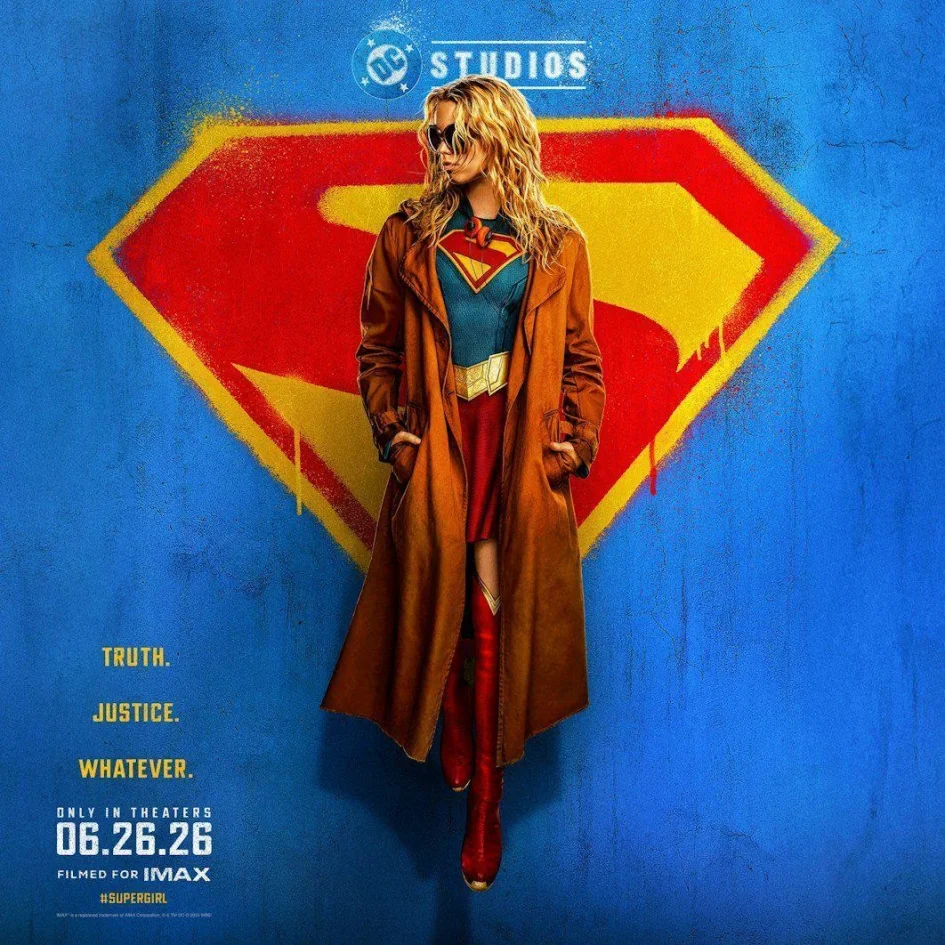
Starting off the new DCU with a Superman story was the logical choice. After years of a controversial portrayal of Superman in the DCEU movies, it was refreshing to have a more traditional Superman that most audiences could get behind. While the movie wasn’t a slam dunk for everyone, there was something everyone agreed on: Milly Alcock was perfect for Supergirl. It seems like James Gunn and the other creatives knew they struck gold with that casting and needed to take advantage of it. Supergirl was then announced to be the next installment in the DCU, with Gunn claiming the amazing script was too good to pass up. This may have surprised some people, but when comic fans found out this movie was based on the legendary comic Supergirl: Woman of Tomorrow, it made a lot of sense. Woman of Tomorrow is not only a well-loved comic but also a perfect introduction to Kara, Krypton, and the more science-fiction side of this universe. With an amazing story as its guide and an amazing lead in Milly Alcock, Supergirl was looking to be a great second entry into the DCU.
Supergirl follows pretty much the same story as the Woman of Tomorrow comic. Kara Zor-EL is on a red sun planet, where she is powerless, drunkenly celebrating her birthday. She crosses paths with Ruthye Marye Knoll (Eve Ridley), a young woman seeking revenge on the man who killed her family. Kara is rather uninterested in helping until her dog Krypto, is poisoned by the same man, Krem of the Yellow Hills. The two then take off across the galaxy to track down Krem. When adapting any book/comic to the big screen, there are bound to be differences, if nothing else, due to the limitations of each medium. A good adaptation can sometimes have many differences, plot or character-wise, but it keeps the soul of the original project. Supergirl has many changes from the source material, and almost all of them are working against it.
Whether it be for time constraints, a lack of trust in the audience, or just for entertainment, there are a multitude of changes that drag this movie down. Again, reviewing the film compared to the comic is not fair to the filmmakers or the goal here, but when there are issues with the movie that stem from a change made, it’s hard not to bring them up. Of these issues, the thing holding Supergirl back the most is its writing.
It’s genuinely hard to wonder how the writers could have read the comic and chose to make the creative choices they did. Simply put, the story is boring. Instead of being an interesting and conflicted villain, they opted for a Ravager knock-off who will most certainly be forgotten by audiences. Jason Momoa is a great portrayal of Lobo, but he is inserted into this story for no reason. There’s nothing plot or character-wise that justifies his presence, and the constant attempts at humor definitely did not help. But by far the weakest part of this is, unfortunately, Supergirl herself.
Milly Alcock is amazing as Supergirl, and she tries her hardest to save this mediocre script. The few scenes where emotional weight was felt were all thanks to her. But the character of Supergirl is just a mess in this movie. It’s the same version of the character as the comic, but without any of the depth or nuance. There’s a lack of commitment to anything that truly defines her character or motivations, so the movie is instead left with another generic superhero. The third act then takes boring character writing to straight-up bad. There’s nothing set up well throughout the runtime, so nothing in the final 45 minutes felt earned. Conflicting character motivations and constantly changing morals made walking out of this theater a confusing experience, much more than an inspired one.
As said earlier, this movie was fast-tracked to take advantage of the excitement around Milly’s casting, and nothing suffered more than the visuals. For a company as big as DC, and a name as big as Supergirl, there’s no excuse for how poor this movie looks sometimes. Lighting isn’t something that usually gets brought up in a review, but when it is as bad as it is in this movie, it’s hard to ignore. The visuals that looked good were few and far between (and mostly in the trailer). The best-looking parts of Supergirl can be attributed to the costume team, who must have had a blast making some of these alien designs. They felt very reminiscent of Star Wars, and helped sell the illusion better than anything else technical going on.
Editing again is not something that usually needs to be discussed, but here we are. There seems to be a disconnect between what was shot on set and what director Craig Gillespie wanted the final product to look like. At its best, editing is something the audience should never think about, moving the story/scene along seamlessly. In Supergirl, it was hard to ignore, as the camera was constantly cutting, sometimes multiple times a second. This made the action sequences lose a sense of space or reality whatsoever. It was hard to follow along with where the characters were and what they were doing. Combine this with a very uninspired score, and some poor soundtrack choices, and not once did this movie truly feel super.
When adapting a beloved comic like Woman of Tomorrow, the comparisons are inevitable, but the biggest issues with Supergirl are not the result of a missing scene or small change. They’re the consequence of creative decisions that leave this feeling like a shell of the comic. Milly Alcock is trying her hardest to breathe life into a character and script that refuses to be anything memorable. For the future of the DCU, there needs to be a higher standard. A great comic book story is not the same thing as a great script. These projects need time, not just for the script but for the entire production crew. It feels reminiscent of the early MCU, where the script took a back seat to introducing characters and worldbuilding. Supergirl isn’t a disaster of a movie, but instead of an inspiring tale about the Woman of Tomorrow, it’s a reminder that Hollywood still hasn’t learned from the sins of its past.
2.5/5 Stars