
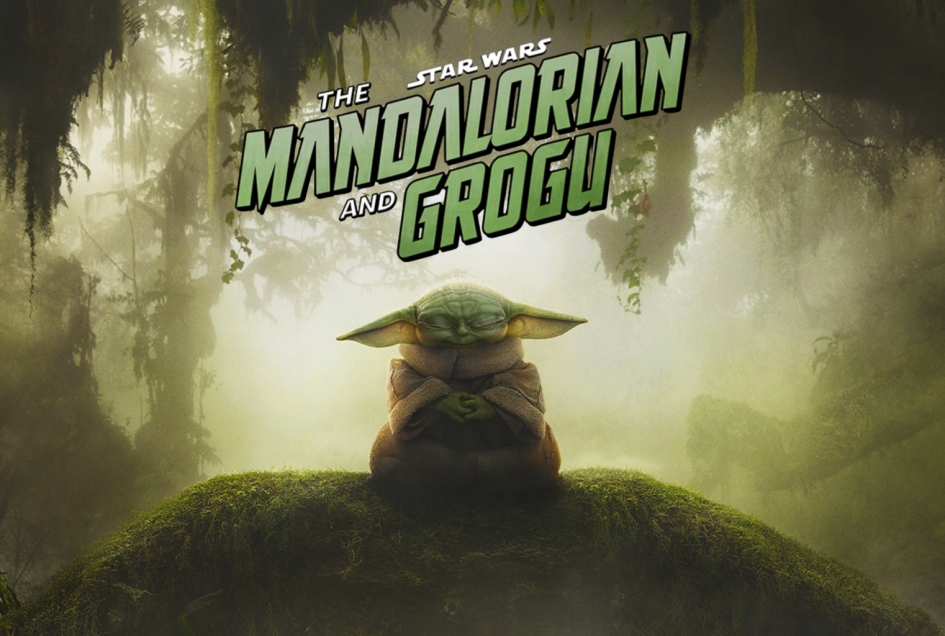
The last time a new Star Wars movie hit theaters, fans left rather disappointed. After the backlash to Solo: A Star Wars Story, the failure of The Rise of Skywalker felt like the nail in the coffin for a lot of Star Wars fans. Depending on who you ask, two or three movies in a row had been complete flops, and the once groundbreaking space-opera fairy tale was no more than a corporate hollow cash grab. That is, until about a week later, when The Mandalorian season one finale was released on Disney+. At a time when Star Wars felt like a shell of its former self, The Mandalorian was managing to recapture the magic that took the world by storm in the first place. It was everything the sequels weren’t: smaller in scale, rough around the edges, and a personal story. After spending so much time with chosen ones, it was refreshing to follow a quiet gunslinger just trying to make ends meet. Behind it all was an absurd amount of talent, written by the guy who made Iron Man and Elf, shot by Academy Award winner Greg Fraiser, and scored by Ludwig Göransson. As season one wrapped up, there was hope again for Star Wars.
Now here we are, seven years later, and the supposed savior of Star Wars is finally making his way to the big screen, and no one seems to care. Even Solo made bigger waves in the cultural zeitgeist. I still remember the day The Force Awakens released in theaters in 2015, my dad picked my brothers and I up from school so we could catch the earliest showing possible. When we arrived at the theater, half of my teachers were already in line to get tickets. When we left the theater, I remember my dad saying, “I can die happy now because I got to watch a Star Wars movie in theaters with my kids.” That’s how much this franchise used to mean to him and so many others. Compare that to now, where I have yet to meet another person with tickets for The Mandalorian and Grogu. The majority of people I’ve asked were unaware it was coming out, or have zero interest in seeing it, and it’s hard to blame them. It’s been three years since there was any new Mandalorian content, so surely they’ve got a good reason to bring this story to the silver screen, right?
Short answer: No, but let’s talk about it.
The story unsurprisingly takes the same approach as the show. The New Republic recruits Din Djarin, the now outcast Mandalorian, to help clean up the remnants of the Empire by hunting down ex-imperial warlords and other threats. In order to find an unknown imperial general, Mando must track down Ratta the Hutt, son of the infamous crime lord Jabba. From here, the story devolves into a series of “go talk to this person” side-quests and really loses its footing. Creator Jon Favreau claims this was an entirely new story, and not a rework of The Mandalorian season four. Whether that’s true or not doesn’t really matter because it feels like a reworking of a few episodes of TV, which makes it drag.
A lot of recent Disney projects have fallen into the trap of putting marketing material first, then building a story around that, resulting in a messy narrative. The Mandalorian and Grogu avoid this problem by just not telling a cohesive story altogether. It truly feels like they did not even attempt to write transitions between some of these arcs, with one section having a literal fade-to-black as the only explanation for the next scene. The strategy here is pretty obvious: make something safe, broadly appealing, and impossibly simple to avoid making general audiences upset. Given the backlash to The Last Jedi and The Rise of Skywalker, it’s unsurprising that they took this approach. Unfortunately, it completely backfires. It’s like shutting off the gas because you’re scared of burning yourself on the stovetop. Sure, you won’t burn yourself now, but good luck trying to cook anything tasty.
Even if Andor-level storytelling was never expected, at the very least, there was hope for some fun action. Somehow, the film misses them too. None of these set pieces carries real tension, largely because the movie establishes early on that Mando is basically invincible. On top of being shot in a generic fashion, the actual fight choreography is all over the place. The only stakes are simple: how long will it take the Mandalorian to remember he has a weapon and pull it out of thin air, because this happens multiple times. Season 1 Mandalorian had class, his victories felt earned. Where he lacked in firepower, he made up for it in quick thinking and experience. Here, the action often feels designed around a much simpler question: “Do we have a cool shot of this gadget for the trailer yet?”
There could be an entire paragraph dedicated to the weak performances or how bland and lifeless the visuals are, but when all these issues are laid out, it paints one clear picture: It doesn’t feel like a Star Wars movie. Every era of Star Wars has had flaws, but the magic of these stories made them easy to ignore. At its core, Star Wars has always been more fairy tale than science fiction. Audiences were willing to suspend disbelief because the world and its characters were strong enough to get lost in. The Mandalorian and Grogu never fully creates that sense of immersion, which makes the cracks impossible to ignore.
There are two members of the cast doing everything they can to recreate that feeling of classic Star Wars. Ludwig Göransson’s score is a blast. He takes the main theme we all know and love from the show, and remixes it a million different ways, each more fun than the last. Again, he finds a good balance between the sweeping orchestral sound associated with Star Wars and a dystopian western, producing a sound unlike anything else in Hollywood.
John Knoll and his team’s work on the Grogu animatronic is another highlight. Star Wars always manages to nail that balance between making practical effects look really good, but still rough enough to be believable, and this movie is no exception. There are a few sequences where the focus is solely on Grogu, and the commitment to bringing him to life is practically on full display. The miniature sets and other creatures around him are gorgeous to look at and make for the most enjoyable parts of the movie.
The Mandalorian and Grogu plays things so safely that it almost forgets to tell a story at all. There’s an audience that will shut their brain off, enjoy the familiar faces and blaster shots, then forget the experience a week later. And that may be good enough for some people. But Star Wars was never built on being “good enough.” Behind the lightsabers, aliens, and floating rocks, there are stories built on love, redemption, failure, and most of all, hope. While the practically infinite toy and game possibilities helped this franchise become the global giant it is today, the reason people invested in the first place was because of how relatable these characters were. The Mandalorian and Grogu seemingly knowingly ignore that all in hopes of adding a zero to their shareholders’ paychecks, which ironically feels far more in line with the Empire than the heroes the film wants you to root for.
★ ⯪ ☆ ☆ ☆