
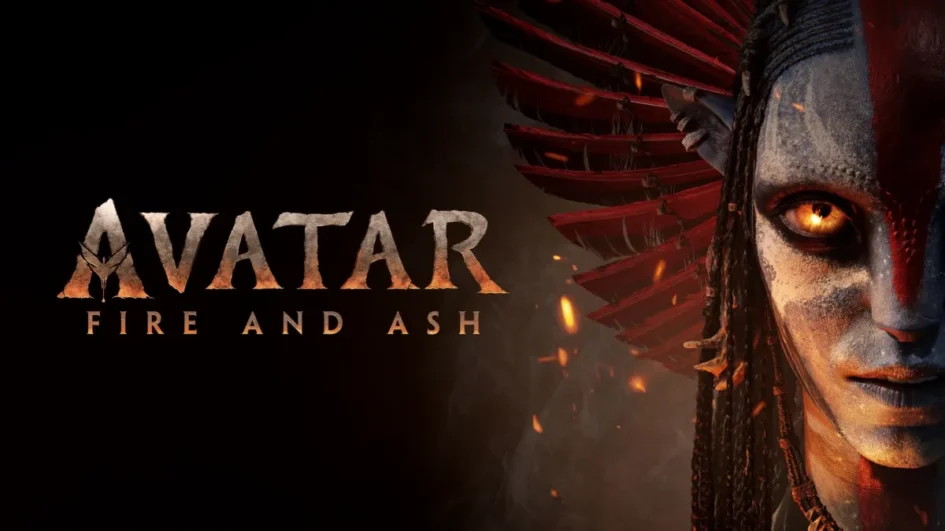
Out of every working director today, it’s hard to argue anyone has more theater appeal than James Cameron. His entire career hasn’t just been about making movies but instead about inviting the audience to live in another world for a few hours. Whether it be hiding from a Xenomorph, running from a T-1000, or trying to stay afloat in shivering waters, he has a way of redefining what cinematic storytelling can look like. There’s no better example of this than Avatar, a fully computer-generated world that captivated audiences all over the globe in 2009 and then again with The Way of Water in 2022. With the major franchises like Marvel, DC, and Star Wars in a limbo phase, movies that elevate to cultural events are increasingly rare.
Avatar: Fire and Ash promised to reignite that spark, returning to Pandora only 3 years after the last journey there, much shorter than the 13-year gap between the other two. There was no need to wait around for technological advances like they had to in the past. The Way of Water basically had to reintroduce this world and its characters to the audience, which held back how much freedom Cameron had with it. With Fire and Ash, the audience was ready for anything, the technology was ready for anything, yet somehow this felt like the least creative entry yet.
Fire and Ash picks up right where The Way of Water left off. The Sully family and reef clan are in mourning for those they lost, particularly Jake’s son Neteyam. This was one of the most compelling parts of the film, seeing how grief manifests itself across the family. These movies are at their best story-wise when time is spent with the family. Whether it’s the kids working together or Jake and Neytiri trying to parent, it’s a joy to watch them interact. Where this dynamic starts to break down a bit is with Spider. He’s always been a diverse character, but Fire and Ash puts him at the forefront from the start. From an exposition standpoint the reasoning makes sense, but some of the dialogue they give him brings the momentum to a stop.
It’s always difficult to draw the line between poor dialogue and poor acting, and in Spider’s case it seems to lean toward dialogue. Storylines that took up a major part of the runtime ended up having little payoff because the emotional weight was just missing. A shame too because Sam Worthington and Zoe Saldaña give their best performances yet. Saldaña steals every scene she’s in. After a lesser role in the last movie, watching Neytiri getting to shine here was a blast. Opposite them, the duo of Quaritch and Varang was also a blast. They provide some of the funniest and most entertaining moments of the movie, but unfortunately don’t go much deeper than that.
The trailers promised not one but new Navi tribes being introduced. For a 3-hour and 15-minute movie, introducing and developing two new clans doesn’t seem too tall of a task. But for some reason that development is missing. The Windtraders get little to no backstory or screentime, while the Mangkwan Clan gets about one monologue’s worth. After two movies of Quaritch being the main antagonist, something new was needed. The idea of Quaritch pairing with a Na’vi tribe is really compelling, but when this tribe is given little more to do than be his warriors, it’s disappointing. So if these two new tribes didn’t get much exposition, where did the runtime go?
A surprising amount of this movie, and almost the entire third act set piece, feels like a second version of The Way of Water ending. Cameron said these movies were originally supposed to be one, and it’s very obvious in a lot of moments. There are action sequences that follow almost the same layout as the previous installments. In a world filled with so much creativity, it’s hard to make excuses for doing almost the same thing. This approach wasn’t all bad, as some storylines got fleshed out more and made for some of the best parts of the film. But overall it’s confusing how two new tribes, a major scientific discovery, and new powers can all be revealed, but the story plays out relatively the same. That all being said, the issues with Fire and Ash come nowhere close to outweighing the experience this movie provides.
It is impossible to praise the visuals in Avatar without sounding like a broken record, but it deserves all of it. Breathtaking is an understatement. The stress and adrenaline some of these action sequences manage to create is incredible. Three installments in, and the way Cameron uses the world and its people is mindblowing. Simon Franglen’s score has not evolved a ton from James Horner’s original score, but his ability to send chills throughout the audience is special. For the entire 3 hours and 15 minutes of this movie, there wasn’t a single moment where the visuals let the audience down. The worst shots still manage to be some of the most impressive filmmaking to date.
If The Way of Water was Cameron showing off the technology he built, Fire and Ash is him showing off how good of a filmmaker he is. The way he presents Pandora is simply magical. The Avatar films at their core are about Pandora and its inhabitants, big and small, and the protection and importance of all of them. Cinema has seen anti-deforestation and anti-colonialism before, but what makes Avatar stand above all of them is the ability to make the audience truly fall in love with the world. If these movies continue to look this good, there will always be an audience. It’s a one-of-a-kind spectacle.
Despite being blown away countless times, it’s hard not to walk away from Fire and Ash slightly disappointed. The Way of Water confirmed two things: the technology was there, and fans wanted more Avatar now more than ever. Fire and Ash had all the ingredients to cook up a generational blockbuster but got the proportions wrong and instead made something familiar. The story falls short due to a misuse of runtime and questionable dialogue. As an action movie, this still checks all the boxes, making for one of the most fun theater experiences money can buy. Avatar: Fire and Ash follows in its predecessor’s footsteps, achieving a level of cinematic spectacle few films can match, but never quite ascends to the emotional or narrative heights set by the earlier entries.